
Stronger Everyday
Positioning Guide!
Helping prevent an abnormal head shape can be as simple as incorporating different positions into your baby’s day. Different positions include laying on tummy, laying on each side, assisted sitting, and assisted holding! You can begin introducing your baby to these positions within the first week following delivery. Placing your infant in different positions supports healthy infant development during the first few months of life when babies are building the strength and coordination needed for milestones such as head control, pushing through their hands and arms, rolling, pivoting, and crawling. Here are five easy activities you can use to into your daily routine while also creating meaningful bonding moments with your child.
Baby Laying on Chest

This is a great way to start introducing tummy time to your infants while bonding! Start by reclining on the couch and place your baby on your chest. Try talking or singing to them to get their attention. You may see your baby lift their head to interact with you! It’s okay at the beginning if their head is bobbing or if they are only able to hold for a couple seconds at a time. This helps your baby start building the strength and movements needed for head and trunk control. If they are not lifting their head independently yet, gently lift your baby’s head to encourage them to look at you while you interact. You can also guide their head to lay on each side to help improve neck range of motion and reduce a preference for turning in only one direction. As your baby gets better at this task, try laying down until completely flat!
Play Time on the Floor!

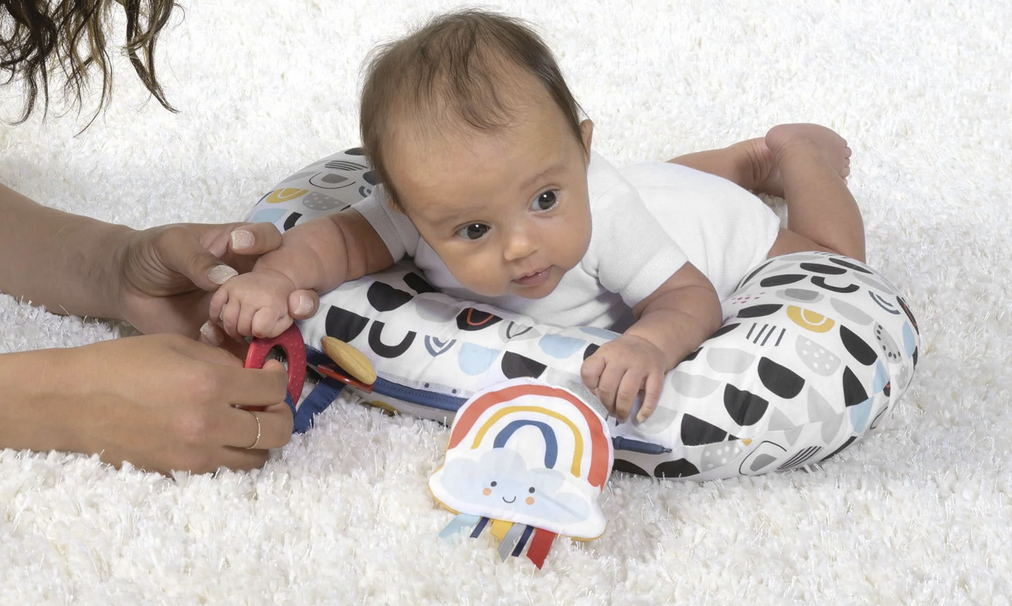
Tummy Time can be both fun and highly beneficial when you get involved with your child. Spend some time on your tummy alongside your baby on the floor to make it an engaging, shared experience. In the first few weeks/months when your baby is getting used to laying on the floor, you can place their upper body and trunk on a pillow or boppy to help support their posture. Bring down some books or toys down to the ground for some entertainment! For our babies that are getting stronger, place a few toys in front of them on the ground to try to introduce weight shifting and reaching. If you baby has a side preference, try to introduce the toys on the opposite side to encourage them to look and reach in that direction. This helps promote more balanced neck strength and improved range of motion.
Side-Lying Play

Another position that is beneficial for your baby is laying on their side. This position reduces pressure on the back of your baby’s head, assists in bring their hands and feet to mid-line, and assists in activating their head and back muscles! You start by laying your baby on their side with their back resting against your arm, leg, or pillow, and have a toy or book in front of them for play time! To develop more neck strength, prop them on their arm so that they have to hold their head up while in the side-lying position.
Assisted Sitting
Another position to introduce is sitting! In the first few weeks, you can support your baby at their trunk while they sit! As they get better at this position, you can start supporting them at their hips. Make sure you have pillows around them or you are surrounding them to support them if they lose their balance. Introduce toys around them to encourage them to rotate their heads.
Tilts and Football Hold
Both of these exercises are fantastic at building neck strength!
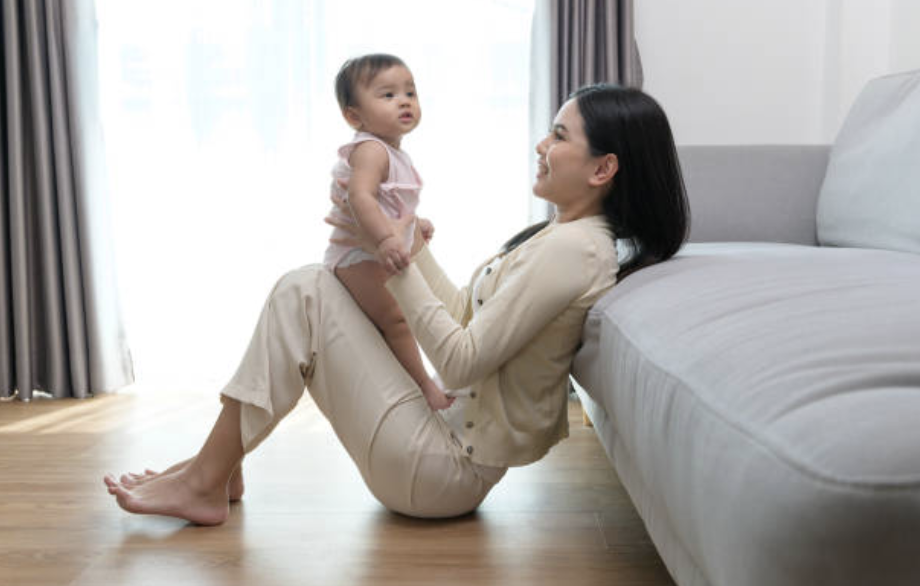
Tilting Side to Side in Sitting:
You can hold your baby either straddle sitting on your leg, or sitting on your knees. Slowly tilt your baby to one side and wait for your baby to correct their head to the upright position. Make sure that you go to both sides, especially if they have a tilting preference!
Football Hold:
When you are carrying your baby around the house, carry them in the football hold position. Have your baby face outward, and (at the beginning) have them at a slight tilt so that their head is angled toward your shoulder so that their head has to tilt to maintain upright position. Do this to both sides! If they have a tilting preference, make sure you work on the side that they do not typically tilts towards!
Tips for Diaper Changing!

When changing your baby’s diaper, incorporate rolling your baby on their side when taking their diaper off and putting their diaper on rather than lifting their legs up! You can also transition your baby to the sitting position from transitioning them from laying on their back, to laying on their side, and lifting them in the sitting position! This allows your baby to spend more time on their side and engage their muscles during these transitional movements. You can also switch the direction your baby’s head faces on the changing table, encouraging them to look left or right. Adding a few minutes of playful interaction with a toy, silly faces, or funny sounds can make diaper changes enjoyable while helping strengthen and stretch their neck muscles.